

Which Candle Wax Should I Use?
16 September 2026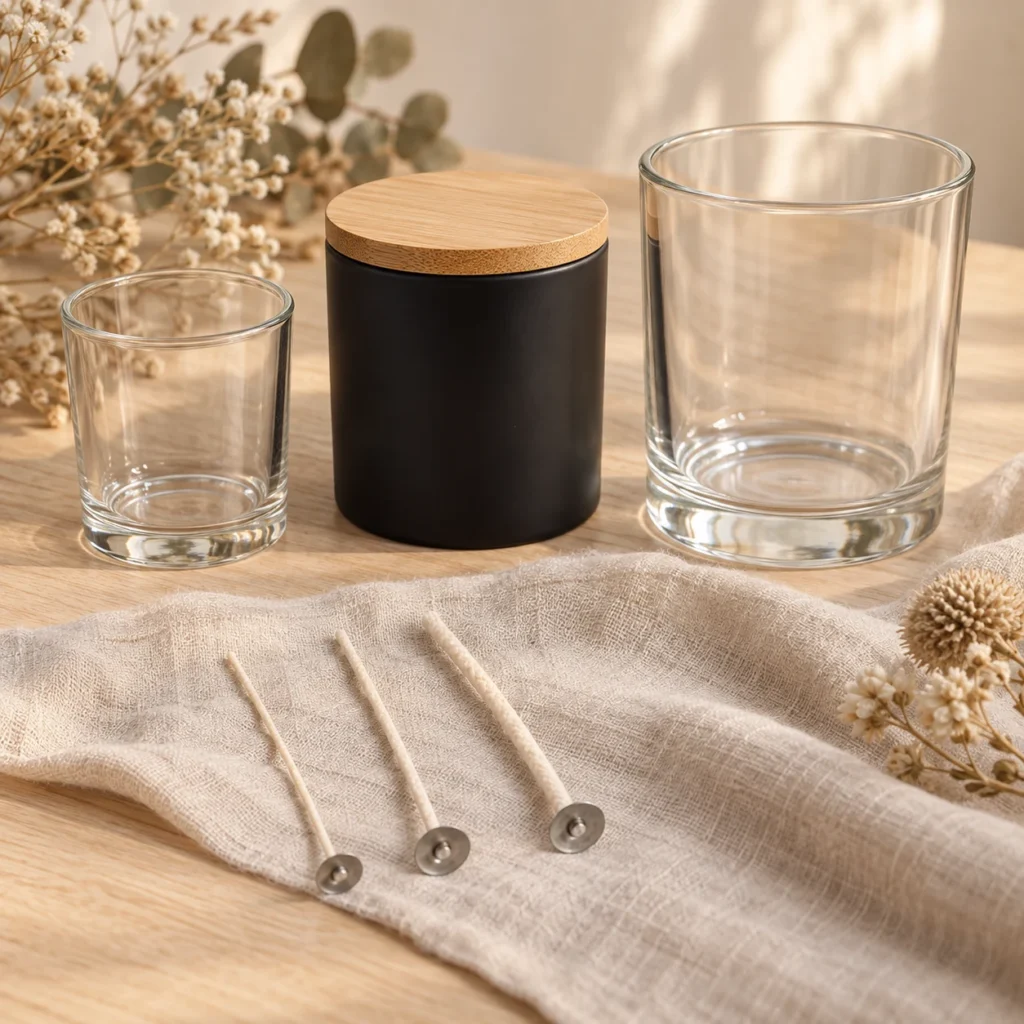
There is no universal wick size. Two things decide where you start: the wax you are using, and the diameter of your container. Everything after that is testing.
Why the size matters
The wick controls how fast wax is drawn up to the flame.
Too small and you get a small flame, a melt pool that only reaches the centre, and a ring of unburnt wax left against the glass. That is tunnelling.
Too large and you get an oversized, restless flame, soot, and a heavy carbon build up on the wick tip.
What you are aiming for is a steady flame and a melt pool that reaches the edge of the container within the first couple of hours.
Step 1: Measure your container
Measure the inside diameter, not the height and not the volume. A 250ml jar and a 250ml tin can need different wicks if they are different widths.
For our three candle containers:
- Small Candle Container 95ml, 57mm across, start with 2mm or 3mm
- Candle Jar Black with Bamboo Lid 220ml, 65mm across, start with 3mm
- Large Candle Container 250ml, 80mm across, start with 4mm
These are starting points, not final answers. Your wax, fragrance load and colour will all shift the result.
Step 2: Pick the wick type
Wick 2mm (10m), R35 The narrowest cotton wick, sold on a 10m roll so you cut to length. Needs a sustainer at the base.
Wick 3mm (5m), R35 The middle size, and the one to try if 2mm tunnels in a 57mm container.
Wick 4mm (5m), R35 The widest cotton wick we carry, for containers around 80mm.
Wick 100% Natural Hemp (Low Smoke) (10m), R45 Hemp rather than cotton, sold as low smoke. Cut to length and fit a sustainer.
Wick Bamboo with Sustainer 10cm, R45 A bamboo wick with the sustainer already attached, for a different look to a cotton flame.
Wick Pre-waxed 10cm with Sustainer, from R20 Already waxed and already fitted with a sustainer, so it stands up straight in the jar with nothing to assemble. The easiest option for a first candle.
You will also want Sustainers (20pcs), R25 for any wick you cut from a roll, and a Wick Holder (7 Hole), R3.50 to keep the wick centred while the wax sets.
Step 3: Account for fragrance and colour
Fragrance oil and dye change the wax you are actually burning. A wick that was right in a plain candle can behave differently once you add fragrance and a deep colour. Treat any starting size as a starting size.
Step 4: Burn test
This is the step people skip and then wonder why the candle tunnels.
Make test candles using the same wax, the same container, the same fragrance at the same percentage, the same colour, and try the size above and below your starting wick. Burn each one and compare.
The seven hole wick holder is useful here, because a very wide container is often better served by two smaller wicks than one oversized one.
Do not assume a wick that worked carries over to a different container, a different wax or a different fragrance. Change one thing at a time and you will always know what caused the change.
The simple rule
Wax plus container diameter gives you your starting wick. Burn testing gives you your final wick.
We deliver anywhere in South Africa, minimum order R350, or collect free from the shop at 90 7th Ave, Edenvale.
